New multi-donor fund by Renaissance Philanthropy seeded by Biohub and Wellcome opens first call for proposals, with letters of intent accepted beginning May 11
SAN FRANCISCO. May 4, 2026. Renaissance Philanthropy today announced the launch of the Open Source for Science Fund, a new multi-donor philanthropic fund dedicated to sustaining and evolving the open source software stack that underpins science. Seeded with $20 million in anchor funding by Biohub and Wellcome and support from The Kavli Foundation and the Research Software Alliance, the fund aims to invest in the open computational foundations of science, and the communities behind them, with an initial focus on the life sciences.
The fund launches with an inaugural Request for Applications. Proposals are invited from software project contributors and maintainers whose work supports data-intensive research and AI-driven discovery in the life sciences. Letters of intent will be accepted beginning May 11, 2026.
Fueling the invisible infrastructure science runs on
Every major scientific breakthrough of the past two decades has depended on open source software. From accurate protein structure prediction to AI-driven drug discovery, the common thread is an ecosystem of open source tools and libraries, built and maintained by scientific communities.
Yet while scientific practice races toward agentic workflows, no-code interfaces, and AI-driven discovery, the open source infrastructure—and the maintainer communities who keep it alive—remain systemically underfunded and not yet designed for AI-native use. Research software is evolving rapidly and foundational tools need modernization to interoperate with agents, support data-intensive applications and model training, and scale with growing computational demands.
“From imaging the universe to modeling life at the molecular scale, science is built on open source software,” said Dario Taraborelli, Director of the Open Source for Science Fund. “As we enter an AI revolution across many fields of science, the computational foundations of every scientist’s work remain open source and need to be funded. Traditional science funding mechanisms are a poor fit for the needs of software projects and the communities that maintain them. This fund exists to change that, by bringing together funders from across the private and public sector to fuel the next decade of scientific discovery.”
A coordinated, multi-donor fund
The fund aims to pool philanthropic, public, and industry capital into shared infrastructure for grantmaking, reducing duplication and enabling funders to act collectively at a scale that no single organization can achieve alone.
Hosted by Renaissance Philanthropy, the fund builds on the six years of trailblazing investments by the Chan Zuckerberg Initiative’s Essential Open Source Software for Science (EOSS) program, the world’s largest dedicated investment in scientific open source software. Over six funding cycles, EOSS deployed $58M across over 230 software projects, pioneered a first-of-its-kind multi-funder model, and demonstrated that coordinated philanthropic investment in open source could deliver measurable impact at scale. The Open Source for Science Fund is built and designed by the team behind EOSS, with lessons from that program built into its structure, review process, and impact assessment approach.
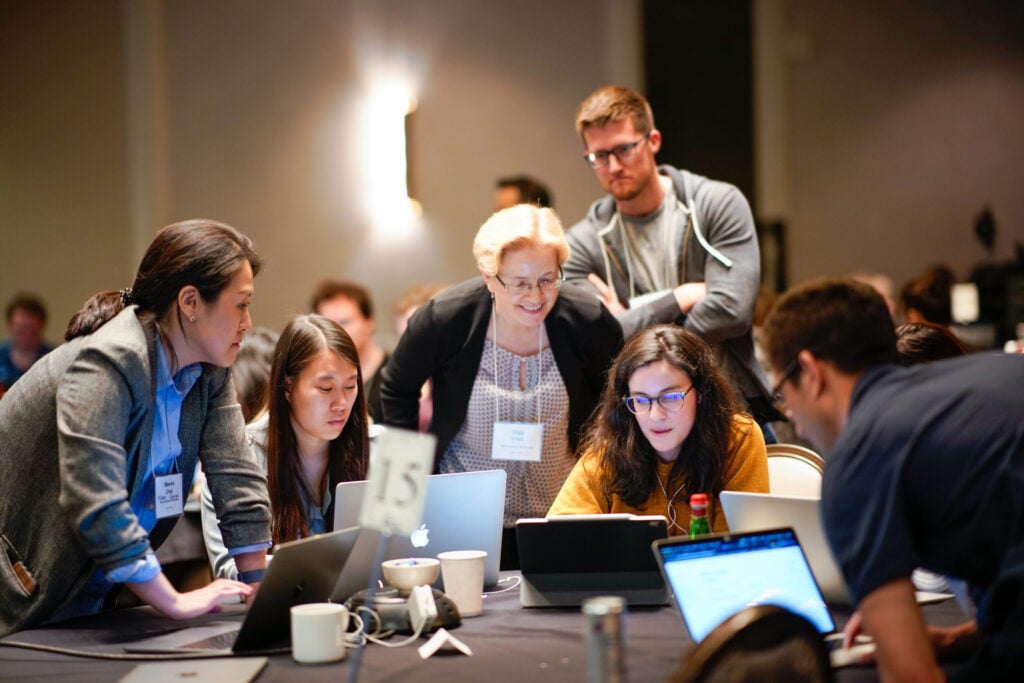
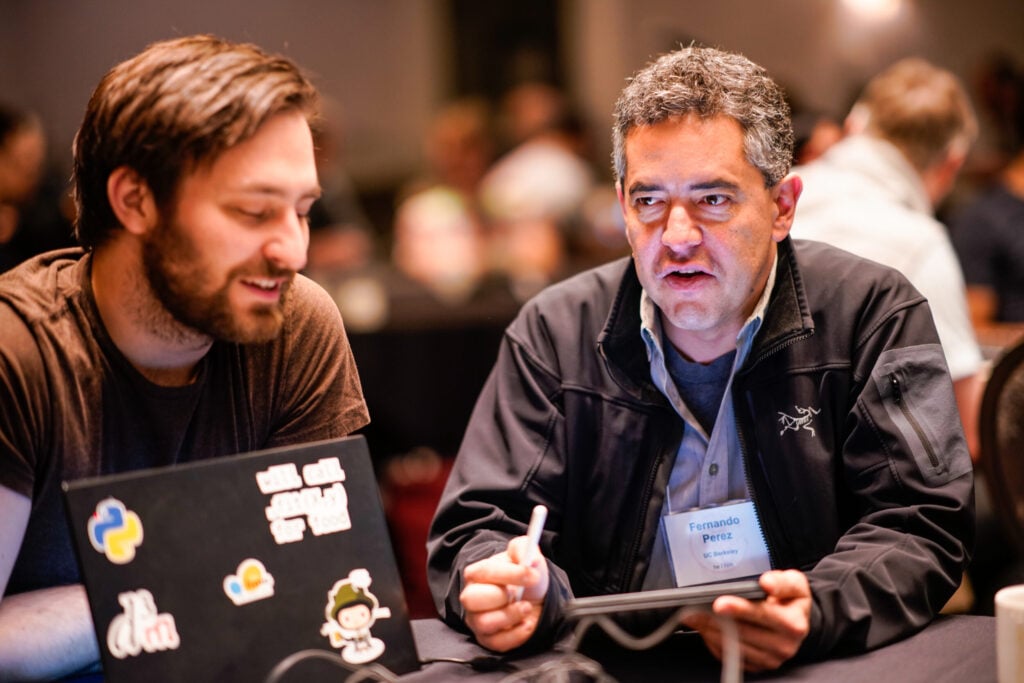
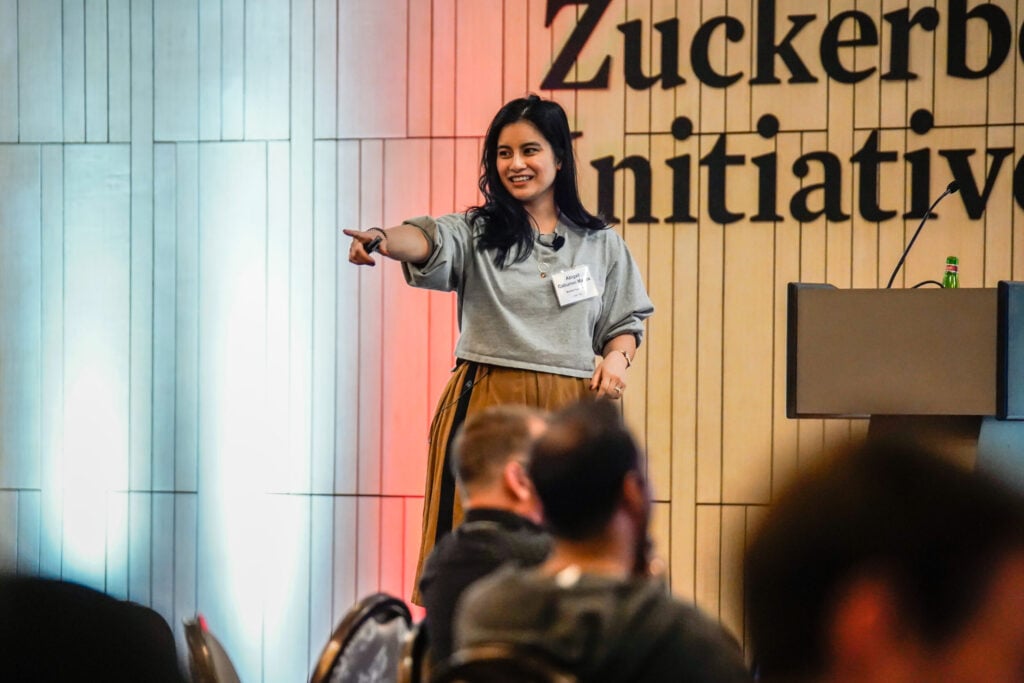
Participants in the kickoff event of the EOSS program (Berkeley, California, 2020)
“The Essential Open Source Software for Science program proved that sustaining the software beneath science matters as much as funding the science itself. The Open Source for Science Fund carries that lesson forward at exactly the right moment — when AI is reshaping scientific discovery and the infrastructure supporting it needs to keep pace. Biohub is proud to help seed what we hope becomes a lasting, shared foundation for science.”
– Patricia Brennan, Vice President, Technology and General Manager, Science, Biohub
“AI is rapidly reshaping how science is done, but its long‑term impact depends on us strengthening the foundations beneath it. By collaborating with other funders and investing in shared, open resources, we can future‑proof AI‑enabled science while helping ensure its benefits are widely accessible and equitably shared.”
– Matthew Brown, Interim Head of Solutions, Data for Science and Health, Wellcome
“At Renaissance Philanthropy, we build time-bound, thesis-driven, expert-led philanthropic funds that advance entire fields. Open source software is foundational to modern science, so we’re proud to be the home for the Open Source for Science Fund. We hope more philanthropists will join Biohub and Wellcome in supporting this critical effort.”
– Tom Kalil, CEO, Renaissance Philanthropy
Inaugural Request for Applications
The first Request for Applications (“Open Source for the Life Sciences”) solicits proposals around two tracks:
- Track 1: Domain-specific tools — Grants of up to $250,000 for software tools with demonstrated adoption in the life sciences and a clear plan to address critical technical or community bottlenecks.
- Track 2: Foundational libraries and ecosystem initiatives — Grants of up to $1,000,000 for broadly used infrastructure-level libraries and cross-cutting ecosystem efforts, with particular attention to AI readiness and interoperability.
Eligibility criteria and application guidelines are available at:
https://os4science.org/funding_opportunity/os4ls/
Questions may be directed to info@os4science.org
“As AI transforms scientific research and software development, the unique intersection of science and software that this fund targets faces special challenges. Scientific software encodes the shared expertise of an entire community: methods, algorithms and approaches that ultimately represent what we accept as good (computationally-driven) science. This fund will support the joint work of advancing the technical foundations and the community practices that underpins key scientific software. It fills a critical gap and will be extremely impactful (as its predecessor, EOSS was).”
– Fernando Pérez, UC Berkeley, Scientific Advisory Board Member
About Biohub
Biohub is a 501(c)(3) biomedical research organization building the first large-scale initiative to combine frontier AI and frontier biology to solve disease. With its compute capacity, AI research and engineering, and state-of-the-art technology for measuring, imaging, and programming biology, Biohub is enabling scientists worldwide to use AI-powered biology to study how cells operate and organize as systems — ultimately understanding why disease happens and how to cure or prevent it. Learn more at biohub.org.
About Wellcome
Wellcome is a politically and financially independent global charitable foundation. Our vision is a healthier future for everyone. We support discovery research into life, health and wellbeing, and we’re taking on three urgent health challenges: mental health, infectious disease, and climate and health. Learn more at wellcome.org
About Renaissance Philanthropy
Renaissance Philanthropy is a nonprofit organization with a mission to fuel a 21st-century renaissance by increasing the ambition of philanthropists, scientists and innovators. The organization designs time-bound, thesis-driven funds led by field experts and inspires talent to take action through playbooks and communities. Learn more at www.renaissancephilanthropy.org